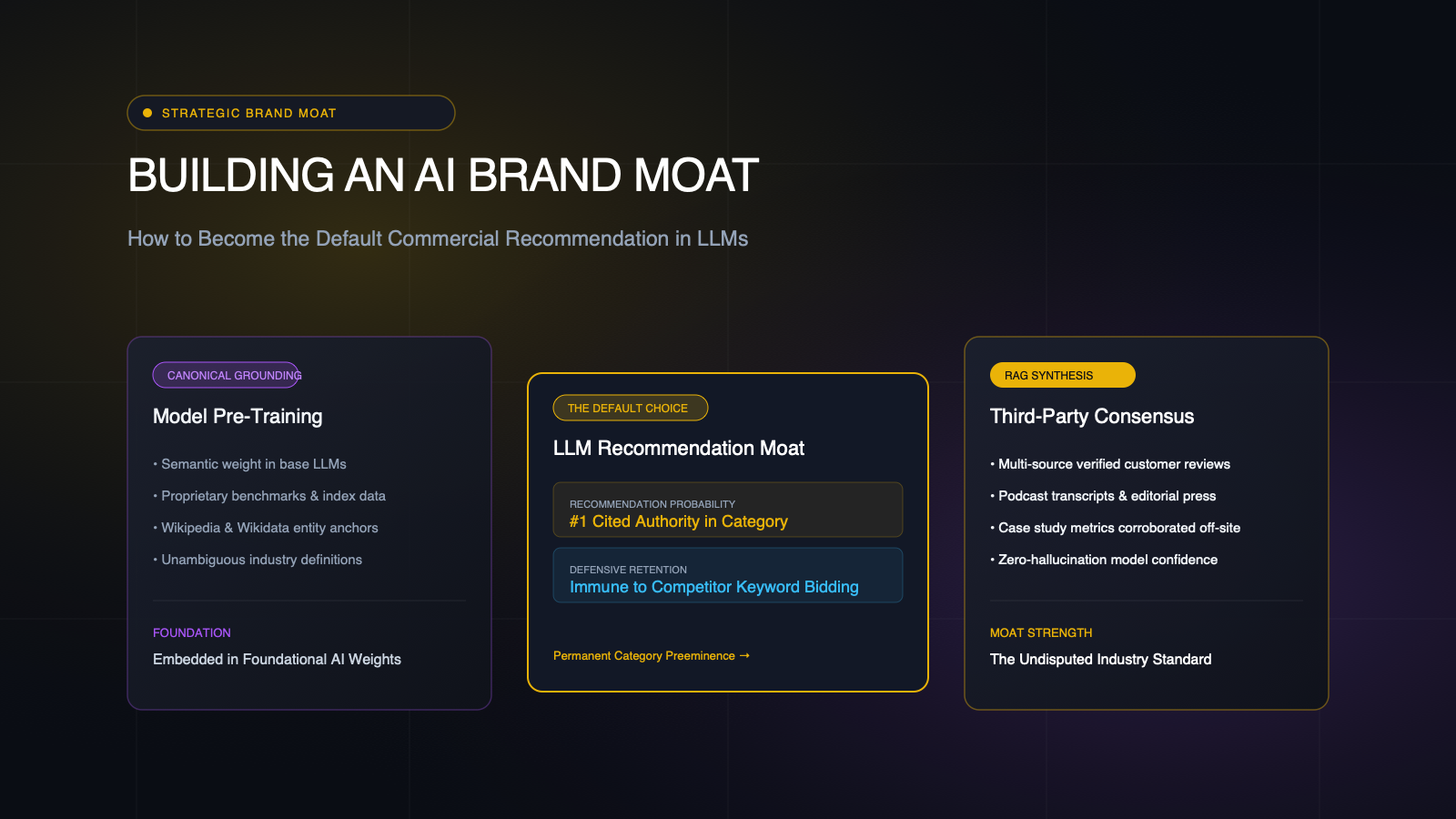
Executive Summary & Key Takeaways
- The New Economic Moat: Category dominance is no longer decided on the Google SERP—it is decided inside the context window of generative AI models.
- Synthetic Consensus Replaces PageRank: Models evaluate entity grounding, multi-source corroboration, and factual density to minimize hallucination risk.
- 5 Pillars of AI Brand Defense: Canonical schema grounding, proprietary benchmark data, neutral reviews, intent preemption, and reputation velocity.
In classic corporate strategy, Warren Buffett popularized the concept of the economic moat: a structural, sustainable competitive advantage that protects a business’s market share and pricing power from rivals.
Historically, companies built moats through geographic distribution monopolies, massive patent portfolios, proprietary supply chains, or multi-million-dollar broadcast advertising budgets.
In 2026, a brand’s most critical commercial battleground is no longer the physical shelf or the Google search results page. It is the context window of artificial intelligence models.
When a prospective enterprise buyer or high-consideration consumer asks ChatGPT, Claude, Perplexity, or Gemini:
"Which company should we partner with to solve our enterprise cloud migration while guaranteeing SOC 2 compliance and 24/7 dedicated support?"
Does the AI recommend your company as the gold-standard benchmark? Or does it name your competitor while completely omitting your brand?
This executive strategy guide breaks down how large language models evaluate vendor authority, the mathematics of algorithmic trust, and how to construct a durable AI Brand Moat.
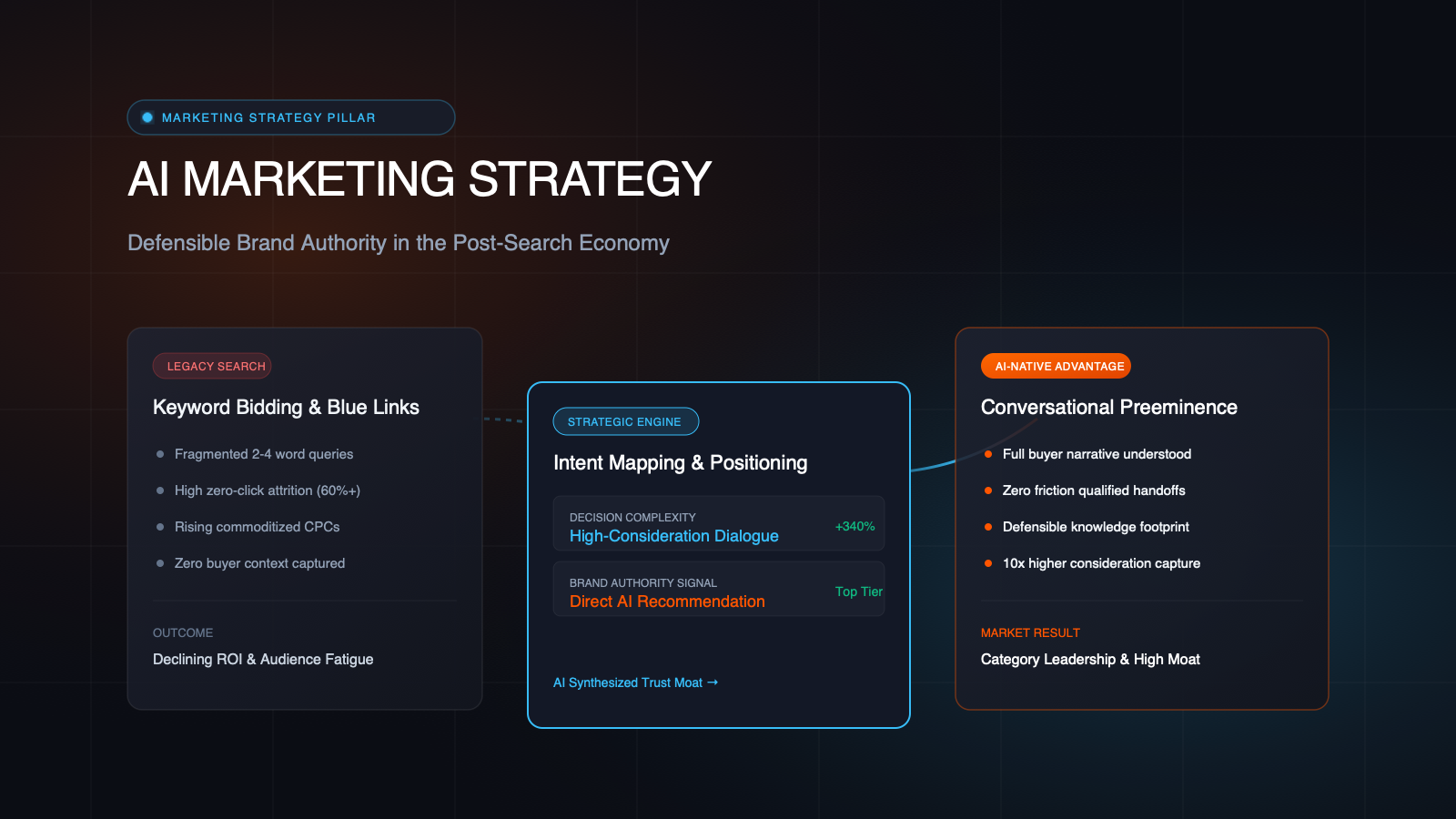
The Shift: From PageRank to Synthetic Consensus
In the search engine era, brand authority was calculated via PageRank: incoming hyperlinks, anchor text keyword density, and domain authority metrics. If you had enough backlinks, you could force a mediocre product onto page one of Google.
In conversational AI, PageRank is replaced by Synthetic Consensus:
Legacy Google PageRank Model
- Backlink volume and domain authority score
- Keyword frequency and on-page density
- Susceptible to link farming and keyword stuffing
- Delivers a ranked list of blue links for user to vet
AI Synthetic Consensus Engine
- Entity Grounding across canonical knowledge graphs
- Multi-source neutral corroboration and review consensus
- Factual density and proprietary benchmark verification
- Delivers a single authoritative default recommendation
Generative models are trained to avoid hallucination. When a user asks for a commercial recommendation, the model’s internal probability distribution heavily favors entities that possess:
- High Semantic Association: Deep co-occurrence with verified industry standards and technical terminology.
- Multi-Source Cross-Verification: Corroboration across neutral third-party publications, academic whitepapers, customer reviews, and verified business registries.
- Structured Entity Clarity: Unambiguous data regarding service offerings, executive leadership, pricing models, and operational capabilities.
If your brand lacks synthetic consensus, the model will deliberately suppress your name to protect its own accuracy score.
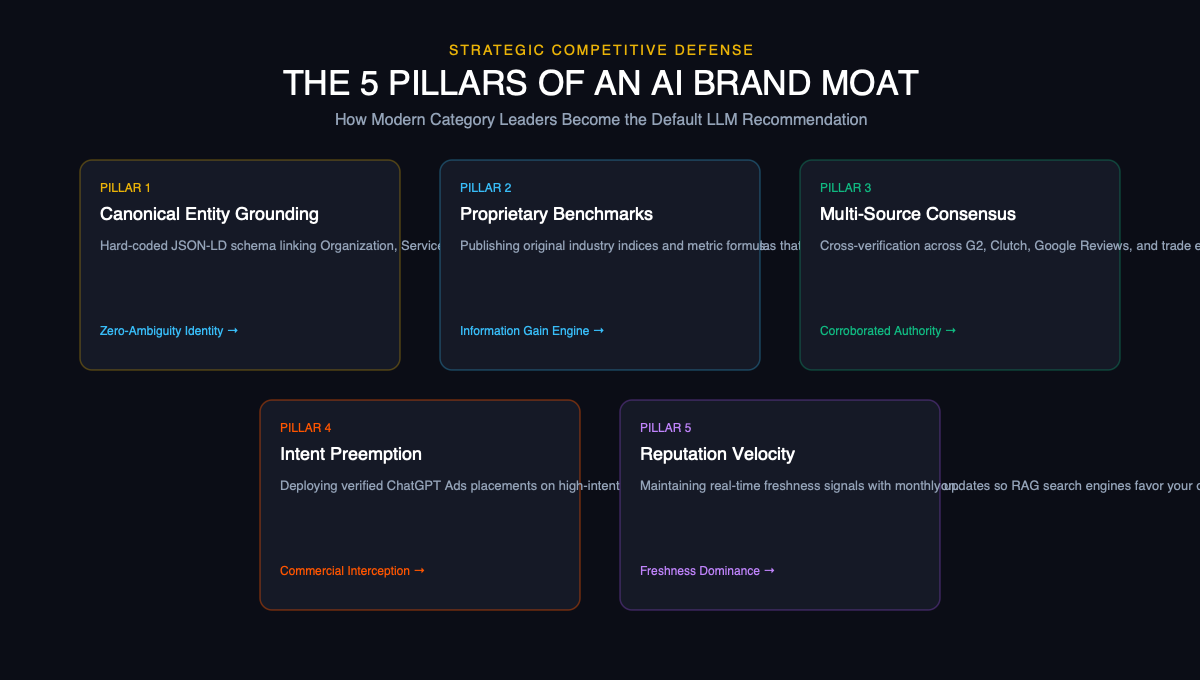
The 5 Pillars of a Defensible AI Brand Moat
Building an AI brand moat requires executing across five foundational pillars:
Pillar 1: Canonical Entity Grounding
Never allow AI models to infer or guess what your business does. Explicitly hard-code your corporate identity using advanced JSON-LD semantic schema markup:
- Declare your
Organizationentity with verifiedsameAsreferences to Wikipedia, LinkedIn, Crunchbase, and state corporate registers. - Define your core competencies within
Serviceschemas that specify verified pricing models, customer outcomes, and operational parameters. - Implement structured FAQ and Q&A schemas that provide concise, authoritative definitions to high-frequency industry questions.
Pillar 2: Publishing Proprietary Benchmark Assets
LLMs have an insatiable appetite for novel data points. Websites that publish rehashed, commoditized blog posts are discarded as low-utility noise.
To embed your company into model weights and RAG retrieval pipelines, publish proprietary benchmarks:
- Annual vertical cost indices (e.g., "The 2026 Conversational CAC Benchmark")
- Mathematical frameworks named and trademarked by your company (like Aepify's Intent Mapping Architecture)
- Real case studies featuring concrete operational metrics (e.g., "Reduced diagnostic CAC by 48% within 60 days")
When models need to provide an authoritative statistic on an industry topic, they will cite your brand as the primary source.
Pillar 3: Multi-Source Off-Site Consensus
Because AI models crawl the entire public web to cross-verify claims, your off-site footprint is just as critical as your on-site content:
- Verified Review Platforms: Maintain robust, active profiles on G2, Capterra, Clutch, and Trustpilot.
- Neutral Editorial Features: Secure coverage in specialized trade journals where your methodology is reviewed objectively.
- Podcast and Conference Transcripts: AI crawlers transcribe YouTube and podcast audio, integrating verbal industry consensus into neural weights.
Pillar 4: Intent Preemption Through Conversational Placements
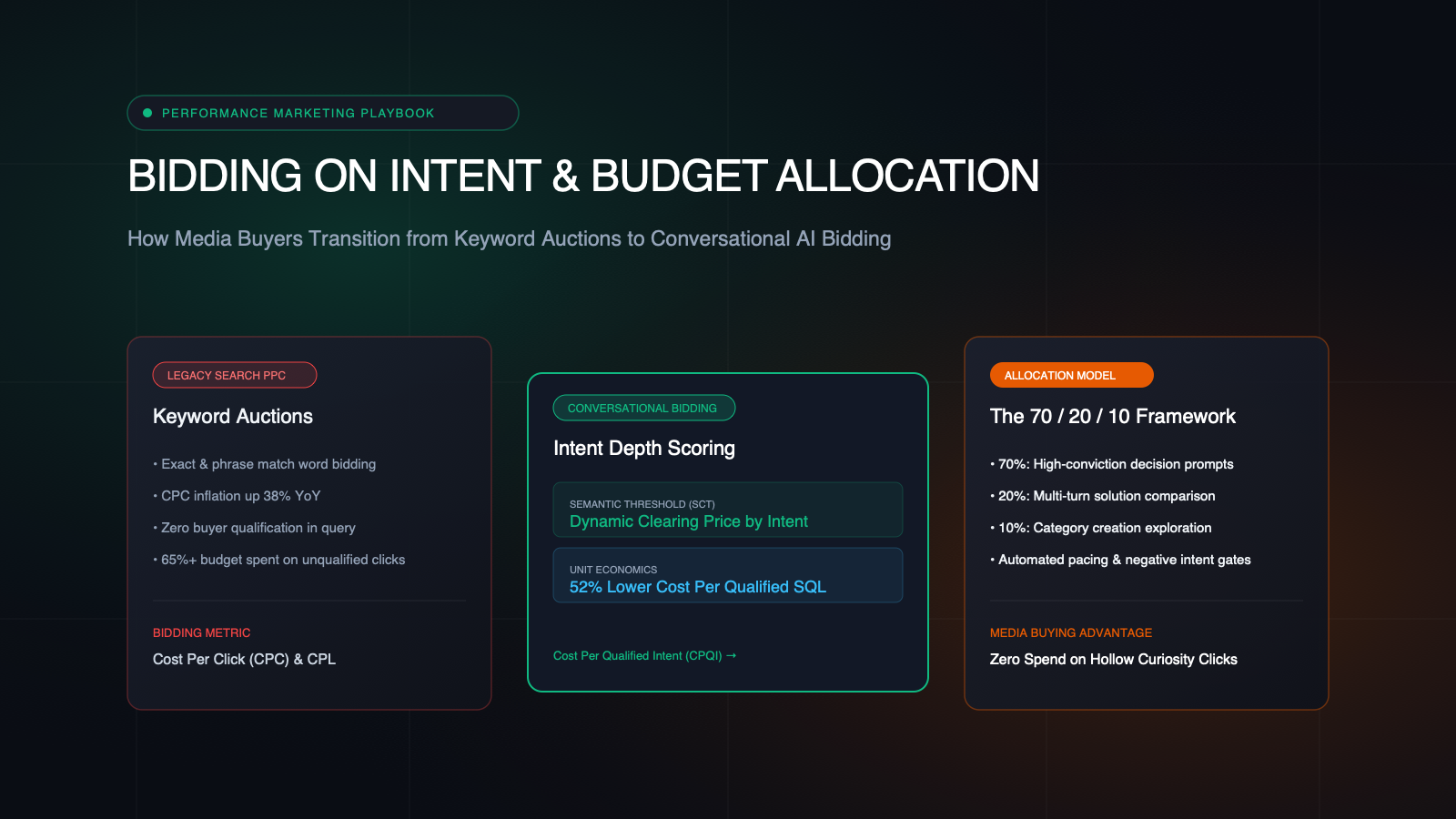
Even if your organic grounding is strong, competitors may attempt to capture high-intent dialogues. Implementing sponsored placements—such as ChatGPT Ads managed by Aepify—guarantees that your brand is presented during active consideration moments for a predictable flat fee of \$99/month.
Pillar 5: Reputation Velocity and Signal Freshness
AI search engines like Perplexity and ChatGPT Search penalize stagnant brands. Maintaining active publication of fresh case studies, client results, and updated pricing indices ensures that RAG rerankers always view your company as an active market leader.
AI Brand Moat Audit: Is Your Brand Defensible?
- ☐ Structured Organization Schema: Complete JSON-LD markup linking all founders, social profiles, and credentials.
- ☐ Proprietary Industry Data Asset: At least one annual benchmark study cited by third-party publications.
- ☐ Cross-Platform Review Footprint: 25+ verified reviews across reputable B2B review portals.
- ☐ Active ChatGPT Placement: Sponsored presence capturing high-intent commercial prompts.
- ☐ Zero Discrepancies Across Public Directories: Consistent address, phone, pricing, and service descriptions across the web.
The Commercial Payoff: Unassailable Market Leadership
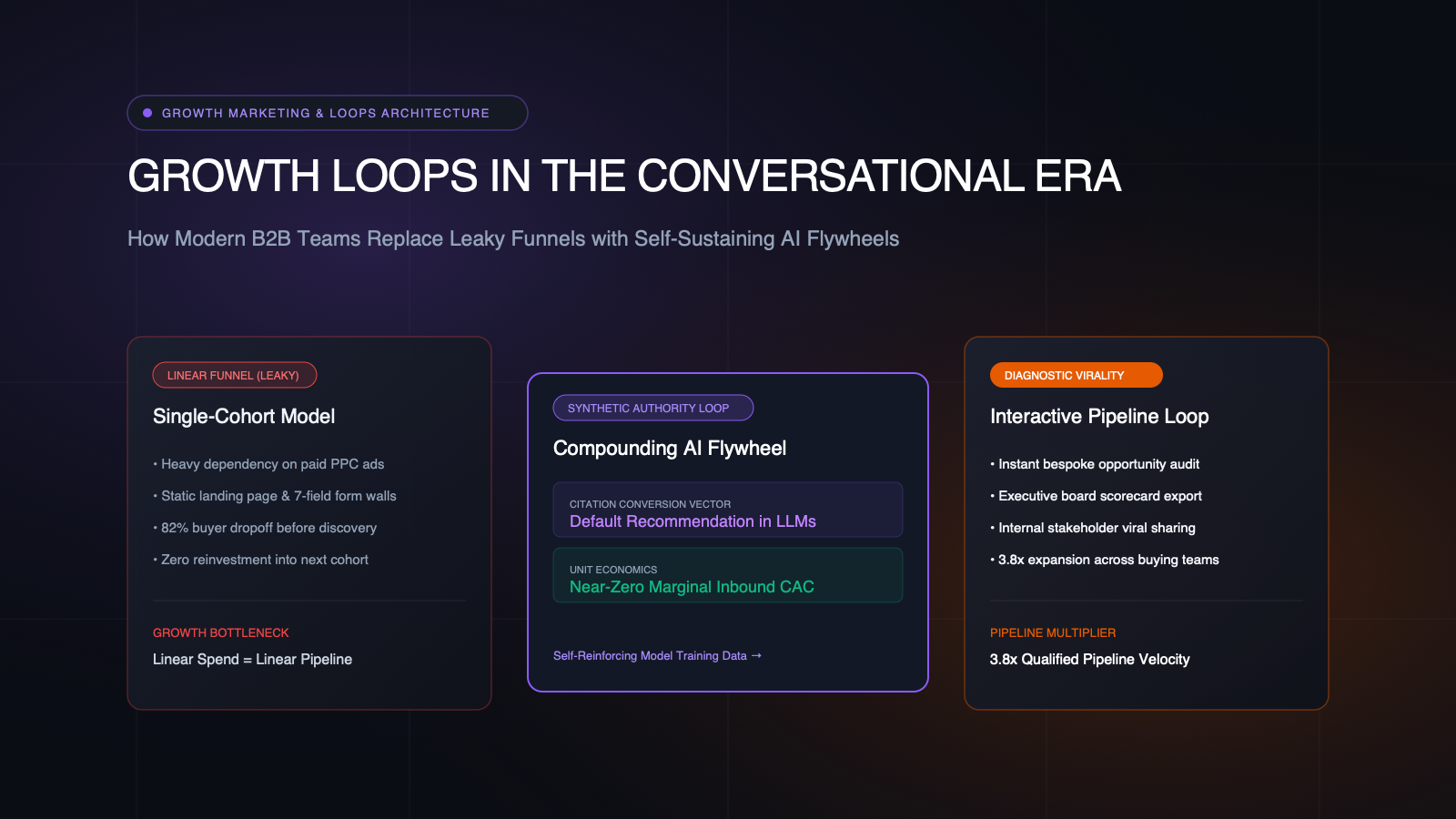
Building an AI brand moat creates a virtuous flywheel.
When LLMs default to recommending your company, your inbound sales velocity accelerates. Increased client volume generates more reviews and citations, which in turn reinforces your entity authority inside the model.
Competitors attempting to rely on legacy Google SEO will find themselves completely excluded from the rooms where modern buying decisions are made.
Audit Your AI Brand Moat Today
Want to know how ChatGPT, Claude, and Perplexity currently evaluate your brand versus your top 3 competitors?
👉 Request Your Free Opportunity Report — Our team will run a diagnostic audit of your entity authority, evaluate your conversational citation share, and provide a tactical blueprint to build your AI moat.
Ready to explore ChatGPT Ads?
Find out where your business could show up in high-intent AI conversations.